About Air Receiver Tank - Vertical
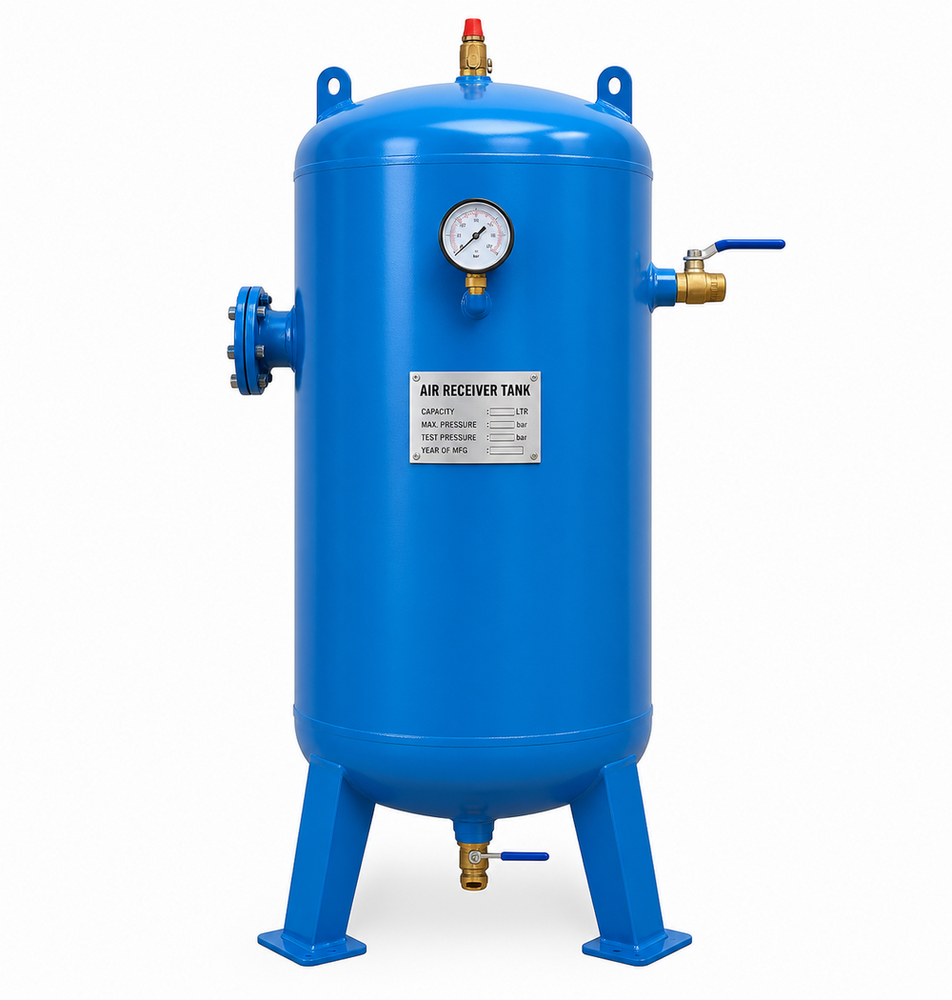
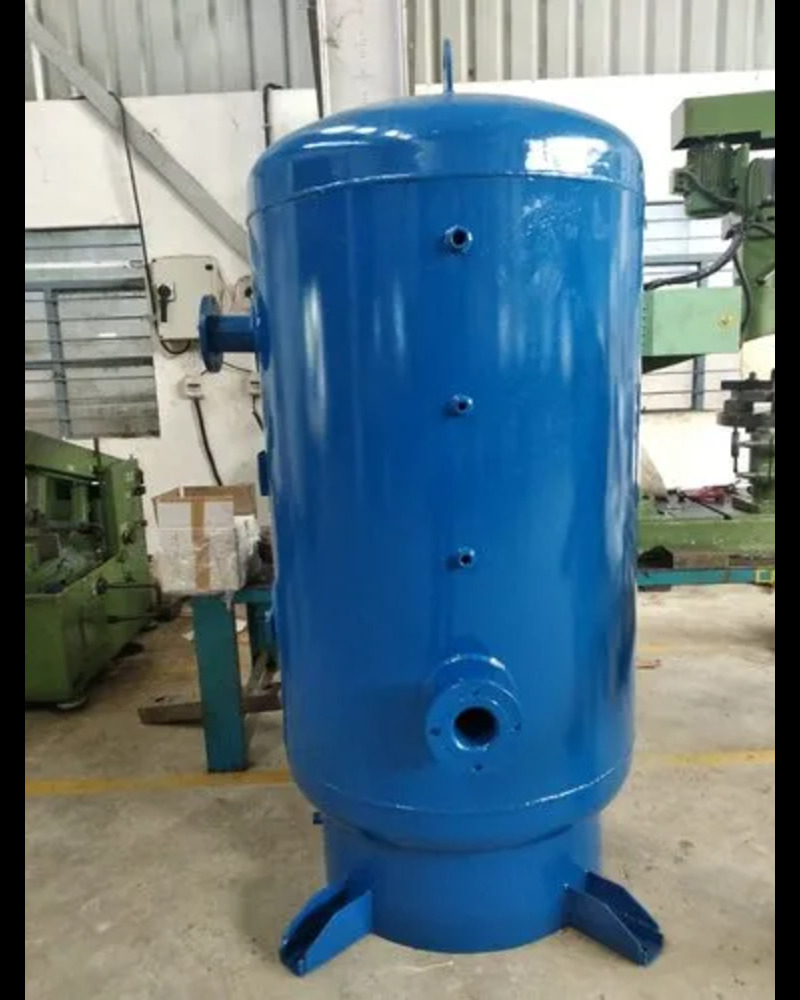
Our 500 Liter Air Receiver Tank is designed for efficient storage and stabilization of compressed air in industrial and commercial compressed air systems. Manufactured using 6 mm thick Mild Steel (MS), the tank offers reliable strength and durability for continuous industrial applications.
Product Specifications:
- Product: Air Receiver Tank
- Capacity: 500 Liter
- Material: Mild Steel (MS)
- Thickness: 6 mm
- Application: Compressed Air Storage
- Construction: Heavy-Duty Industrial Design
- Usage: Air Compressors, Pneumatic Systems, Manufacturing Units and Industrial Applications
Key Features:
- Robust Mild Steel construction
- 6 mm shell thickness for enhanced strength
- Efficient compressed air storage
- Helps maintain stable air pressure
- Suitable for continuous industrial operations
- Designed for long service life and reliable performance
Ideal for industries requiring safe and efficient compressed air storage and pressure stabilization.
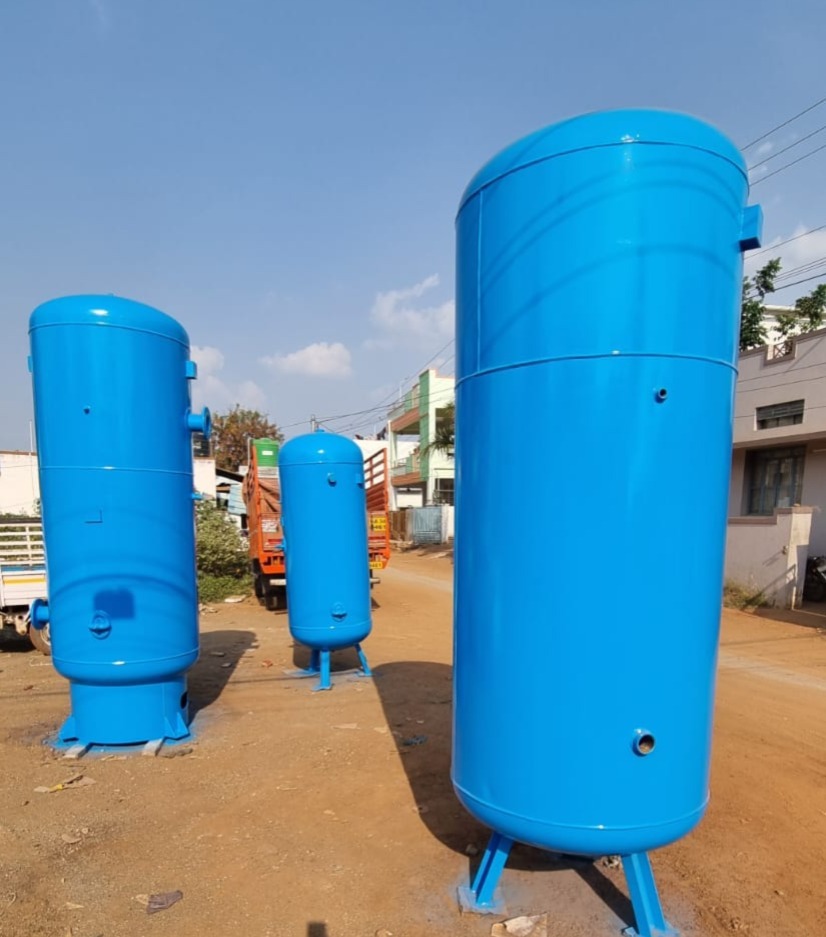
Reliable Compressed Air StorageDesigned specifically for efficient storage of compressed air, this vertical receiver tank ensures a steady air supply, reduces fluctuations, and improves the performance of your pneumatic systems. Its 500-liter capacity makes it ideal for a range of applications in both industrial and commercial settings, aiding energy efficiency and equipment protection.
Built for Durability and VersatilityCrafted from high-quality Mild Steel or Carbon Steel, the receiver tank features powder-coated or painted surfaces with an option for additional corrosion protection. Customizable dimensions and fittings allow seamless integration with varied compressor setups, ensuring that the tank meets unique operational requirements for each installation.
Ease of Installation and MaintenanceThe air receiver tank is suitable for placement both indoors and outdoors, with built-in safety and convenience features. The fitted drain valve, analog pressure gauge, and accessible manhole simplify daily operation and routine maintenance, supporting reliable long-term service and compliance with safety standards.
FAQ's of Air Receiver Tank - Vertical:
Q: How does an air receiver tank improve compressed air systems?
A: An air receiver tank smooths out air output by storing compressed air, minimizing pressure fluctuations, reducing compressor cycling, and enhancing system efficiency. It serves as a buffer for demand surges, protecting pneumatic tools and equipment for a steady and reliable workflow.
Q: What steps are involved in installing this vertical air receiver tank?
A: Installation begins with selecting a suitable indoor or outdoor location based on your setup. Secure the stationary tank on a level foundation, connect using the flanged or BSP threaded inlets/outlets, and ensure the analog pressure gauge, drain valve, and manhole are accessible for operation and maintenance.
Q: When should I consider customizing the tank's working pressure or dimensions?
A: Customizing the tank's working pressure or dimensions is recommended if your application requires unique compressor capacities or site constraints. Custom options allow the tank to operate efficiently with varying air flow needs, space limitations, or higher/lower pressure requirements.
Q: Where is the ideal place to install this air receiver tank?
A: The tank is versatile for both indoor and outdoor use, thanks to its corrosion-resistant coatings. Selection should be based on proximity to the compressor, accessibility for regular maintenance, and environmental factors such as weather exposure and ventilation.
Q: What are the benefits of powder coating or painting the tank?
A: Powder coating or painting provides a durable finish that resists scratches, chemicals, and weathering. These finishes enhance the tank's longevity, protect against internal and external corrosion, and ensure compliance with industrial hygiene standards.
Q: How is routine maintenance performed on the air receiver tank?
A: Routine maintenance includes periodic draining of condensate using the built-in valve, monitoring air pressure with the analog gauge, and inspecting internal surfaces and fittings via the manhole access. Regular checks maintain safety, performance, and prolong the tank's service life.




 Send Inquiry



 Send Inquiry
 Send Inquiry
 Send SMS


 English
 Spanish
 French
 German
 Italian
 Chinese (Simplified)
 Japanese
 Korean
 Arabic
 Portuguese
